For foreign patients researching facial contouring, the prospect of undergoing Two Jaw Surgery in Korea often triggers intense, paralyzing fears. The primary anxiety is the “wired shut” panic. Many patients dread waking up from anesthesia with their jaws wired tightly together, battling severe nasal swelling, and struggling to breathe.
Equally daunting are concerns about maxillofacial nerve damage risks. The fear of a severed facial nerve, resulting in a permanently numb lower lip or chronic pain, is profound. Furthermore, the logistical nightmare of post-operative survival in a foreign country can make the entire process feel impossible. Patients wonder how to manage oral irrigation, consume liquid meals, and communicate with medical staff while recovering alone in a hotel room.
These fears are completely valid. Orthognathic surgery in South Korea is a major medical intervention, not just a cosmetic procedure. However, modern surgical advancements in Gangnam have revolutionized the patient experience and neutralized these exact pain points. This comprehensive guide details the medical realities, the objective recovery timeline, and how high-income foreign patients can safely navigate this complex procedure.
What is Two-Jaw (Orthognathic) Surgery?
Two-jaw surgery is the most complex facial bone procedure available. It involves the precise repositioning of both the upper jaw (maxilla) and the lower jaw (mandible). It is the only definitive treatment for severe skeletal malocclusion, extreme facial asymmetry, and pronounced mandibular prognathism (underbite).
Because the procedure physically alters the foundation of the face, it demands absolute surgical perfection.
Precision is Non-Negotiable: Virtual Surgical Planning (VSP)
When shifting the facial skeleton, the margin for error is zero. Elite maxillofacial centers in Seoul mandate comprehensive 3D-CT scans and 3D Virtual Surgical Planning (VSP).
Before the patient ever enters the operating room, surgeons simulate the exact bone movements on a computer. This technology calculates the precise millimeter adjustments required to correct the bite. It safely maps surgical instruments away from the inferior alveolar nerve, dramatically minimizing maxillofacial nerve damage risks.
Unlocking the Surgical Mechanics: SSRO vs IVRO Jaw Surgery
All incisions for two-jaw surgery are intraoral, meaning there is no visible external scarring. The upper jaw requires a Le Fort I Osteotomy, where the bone is detached horizontally above the teeth roots, moved to the corrected position, and secured with medical-grade titanium plates.
For the lower jaw, surgeons utilize one of two primary techniques:
- IVRO (Intraoral Vertical Ramus Osteotomy): This traditional method involves a vertical cut without using screws to fix the bone, relying instead on natural muscle tension to heal.
- Advantage: Near-zero risk to the nerve.
- Disadvantage: Requires Intermaxillary Fixation. This means the jaws must be physically wired shut for 2 to 4 weeks.
- SSRO (Sagittal Split Ramus Osteotomy): The preferred modern method. The jawbone is split lengthwise, precisely moved, and strictly fixed with titanium screws.
- Advantage: High structural stability and much faster bone union. Crucially, it permits “No-Tie” recovery.
The “No-Tie” Evolution in Gangnam
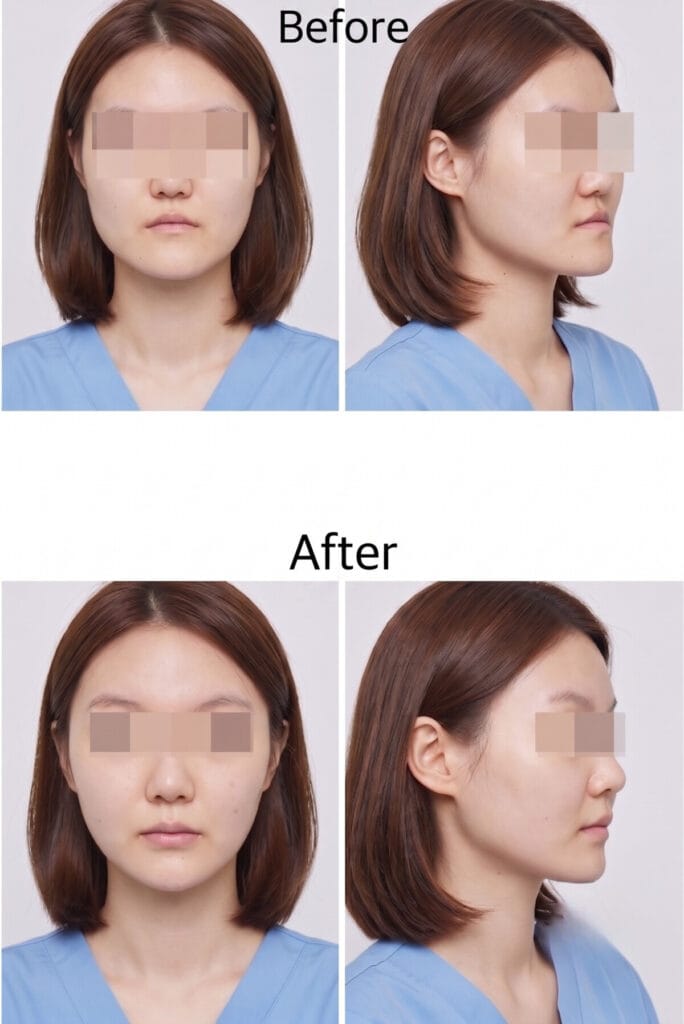
Top-tier Korean clinics now specialize in no-tie two jaw surgery in Gangnam. By utilizing exact rigid fixation (SSRO), surgeons completely bypass the archaic practice of wiring the patient’s teeth together.
For foreign patients, this is the most critical advancement in maxillofacial surgery. Instead of suffering through the claustrophobia of wired jaws, patients can open their mouths slightly to speak. They can breathe comfortably and safely consume liquid nutrition immediately following the procedure.
Double Jaw Surgery Recovery Time: An Objective Timeline
Two-jaw surgery requires an intense, strictly managed recovery protocol. Knowing exactly what to expect is the first step in alleviating post-operative anxiety.
| Recovery Phase | Expected Timeline | Clinical Milestones |
| Acute Care | Day 1 to Day 4 | 3-4 nights hospitalized. Peak swelling occurs. Strict liquid diet via syringe. Temporary breathing difficulty due to nasal swelling is common. |
| Initial Healing | 2 to 4 Weeks | Discharge to hotel. Intraoral stitches removed at Week 2. Transition to soft purees. Chin/lip numbness is normal. Safe for flight back to home country. |
| Maturation | 6 to 12 Months | Post-surgery orthodontics (braces) perfect the bite. Sensation slowly returns (nerves regenerate ~1mm/day). Bones fully fuse. |
Mandatory Safety Protocols
Because this procedure bridges the gap between major maxillofacial reconstruction and aesthetic enhancement, stringent safety protocols are non-negotiable.
A genuinely safe surgical environment requires:
- A dedicated, board-certified Maxillofacial Surgeon (not a general plastic surgeon).
- A full-time, in-house anesthesiologist monitoring vitals from pre-op directly into the recovery room.
- An intensive care unit (ICU) for immediate 24-hour post-operative monitoring.
- Malignant hyperthermia emergency systems and backup power generators on-site.
The Safe Choice: Why VIPs Choose Korea Beauty Guide
Attempting to coordinate complex orthognathic surgery in a foreign language is a profound safety risk. Foreign patients traveling to South Korea for such an intricate procedure require an impenetrable safety net.
Korea Beauty Guide serves as the ultimate risk-mitigation partner for this highly invasive surgery. Recognizing two-jaw surgery as a medical necessity disguised as a cosmetic procedure, Korea Beauty Guide exclusively partners with Gangnam’s premier Maxillofacial hospitals. These carefully vetted institutions are mandated to utilize 3D-CT Virtual Surgical Planning and the advanced “No-Tie” SSRO technique. This entirely eliminates the terrifying “jaws wired shut” phase so patients can breathe and recover in comfort.
Furthermore, Korea Beauty Guide transforms a grueling physical recovery into a manageable, luxurious healing retreat. To combat the fear of post-op isolation, Korea Beauty Guide provides:
- Dedicated 1:1 Medical Translation: Immediate, clear communication during the intimidating ICU phase and all doctor consultations.
- Accelerated Healing Therapies: Scheduled escorts to hyperbaric oxygen therapy, which drastically accelerates swelling reduction and nerve regeneration.
- Curated Nutritional Support: Specialized, nutrient-dense liquid meal deliveries brought directly to the patient’s hotel room. This completely removes the stress of sourcing safe food while healing.
Do not risk your facial structure, functionality, and safety by booking direct and navigating a foreign medical system alone. Secure an elite surgical plan, vetted surgeons, and comprehensive VIP care today.
Contact Korea Beauty Guide today for a free, personalized case review and step safely into a new chapter of facial harmony.