For international patients seeking facial rejuvenation, traveling for cosmetic surgery brings both excitement and understandable anxiety. A facelift is a highly complex, transformative procedure, and the fears surrounding it are entirely valid.
Many patients harbor deep-seated anxieties about waking up with an unnatural, “windblown” appearance. Others are deeply concerned about thick, visible scarring—especially those from warmer climates who frequently wear their hair pulled back.
Navigating a foreign medical system also raises acute safety concerns. From language barriers during critical consultations to the terrifying rumors of “ghost doctors,” international patients need absolute certainty. Understanding the anatomy of a modern facelift and the strict Facelift Safety Protocols Korea mandates is the first step toward a safe, successful transformation.
The Evolution of Facial Rejuvenation
What is the SMAS Layer?
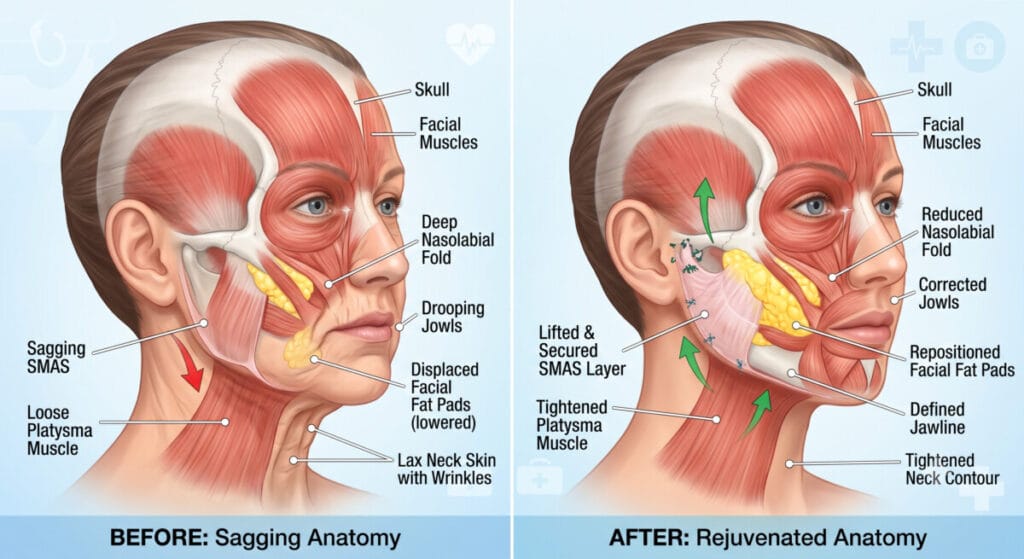
To understand why modern facelifts look so natural, you must understand the SMAS (Superficial Musculoaponeurotic System). This is the deep layer of fibrous tissue and muscle located beneath the skin.
Historically, facelifts only pulled the superficial skin layer tightly across the face. This outdated technique flattened facial contours, widened the mouth, and resulted in the dreaded overly stretched look.
A modern SMAS facelift in South Korea fundamentally changes this approach. Instead of relying on the skin to hold the tension, elite surgeons dissect, lift, and secure the deep SMAS layer. By repositioning the underlying muscular foundation to its youthful state, the face is naturally rejuvenated.
When discussing comprehensive anti-aging, this procedure is frequently paired with neck lift surgery in Seoul. This often involves a platysmaplasty Seoul (targeting the platysma muscle) to effectively correct lower jaw sagging and the “turkey neck” deformity. This ensures a seamless transition between a youthful face and a tight, elegant neck.
(Note: While the SMAS technique is highly effective, patients with severe structural sagging may also explore the deep plane vs SMAS facelift Korea debate during their medical consultations to determine the exact depth of tissue repositioning required for their unique anatomy.)
The Surgical Protocol: Precision and Scars
One of the most pressing concerns for international patients is the visibility of SMAS lifting incision scars. Premium South Korean clinics utilize meticulous surgical protocols to ensure scars remain virtually imperceptible over time.
- Strategic Incisions: The incision begins hidden within the temporal hairline, traces the natural curves of the ear cartilage (tragus), and extends discreetly behind the ear into the posterior hairline.
- Deep Tissue Fixation: The skin is carefully separated from the SMAS. The SMAS layer is then lifted, excess tissue is removed, and the foundation is firmly anchored.
- Tension-Free Skin Redraping: Because the heavy lifting is done by the SMAS layer, the surface skin is gently redraped over the new facial contours without any tension.
- Micro-Suturing: The excess skin is trimmed and closed using ultra-fine micro-suturing techniques. Tension-free closure is the absolute key to preventing stretched, hypertrophic (raised), or keloid scars, allowing patients to confidently wear their hair in updos.
Understanding the Korean Facelift Recovery Time
Planning medical travel requires a clear understanding of the recovery timeline. The Korean facelift recovery time generally follows this trajectory:
- Days 1–3 (Acute Recovery): Swelling and bruising peak. Surgical drains may be placed to prevent fluid buildup, typically removed within 24 to 48 hours.
- Days 7–10 (Suture Removal): Stitches are carefully removed. For international patients prioritizing a safe recovery, a minimum stay of 10 to 14 days in South Korea is highly recommended.
- Weeks 3–4 (Social Downtime): Approximately 80% of the swelling subsides. Patients are generally comfortable returning to social activities and work.
- Months 3–6 (Final Maturation): The incision lines fade significantly, residual micro-swelling resolves, and the final, natural facial contours are fully established.
2026 Standards: Facelift Safety Protocols Korea
Safety should never be compromised. The elite tier of South Korean plastic surgery operates under stringent regulations designed to protect patients at every stage:
- Mandatory CCTV: Top-tier clinics operate with mandatory CCTV systems in all operating rooms. This ensures complete transparency and permanently eliminates the risk of unauthorized proxy surgeries.
- In-House Anesthesiologists: A dedicated, board-certified anesthesiologist must be present for the entire duration of the surgery, exclusively monitoring the patient’s vitals.
- Emergency Preparedness: Premium clinics are equipped to handle severe, rare complications and strictly maintain an on-site supply of critical emergency medications like Dantrolene (used to treat malignant hyperthermia).
The Safe Choice: Why Clinic Selection is Everything
A SMAS facelift is not a standard aesthetic procedure; it is a highly complex surgery demanding absolute mastery of facial anatomy. The margin for error is non-existent. Booking directly with an unverified clinic poses an immense risk for international patients. Hospital selection dictates every aspect of the outcome—from the naturalness of the results to patient survival.
This is where Korea Beauty Guide steps in as the definitive safeguard. KR Beauty Guide acts as an exclusive shield for international patients, eliminating the guesswork and mitigating all risks associated with overseas medical travel.
- The Top 1% VIP Clinics: Korea Beauty Guide partners exclusively with heavily vetted, top-tier institutions.
- Zero-Accident Experts: Patients are matched only with board-certified anti-aging specialists possessing a minimum of 10 years of zero-accident surgical records.
- Uncompromising Safety Audits: Every recommended clinic strictly adheres to the highest safety protocols, including comprehensive CCTV coverage and in-house anesthesiology.
- VIP Concierge & Aftercare: Recognizing the vulnerability patients feel during the critical 10 to 14-day recovery window, Korea Beauty Guide provides dedicated 1:1 VIP medical translation, expertly scheduled de-swelling treatments, and continuous aftercare monitoring.
International patients do not need to navigate the complexities of South Korean medical systems alone. By prioritizing safety, transparency, and elite surgical skill, exceptional and natural anti-aging results are entirely achievable.
Ready to explore your options safely? Contact Korea Beauty Guide today for a free, personalized VIP consultation to find the most qualified, board-certified anti-aging specialist for your specific anatomical needs.