
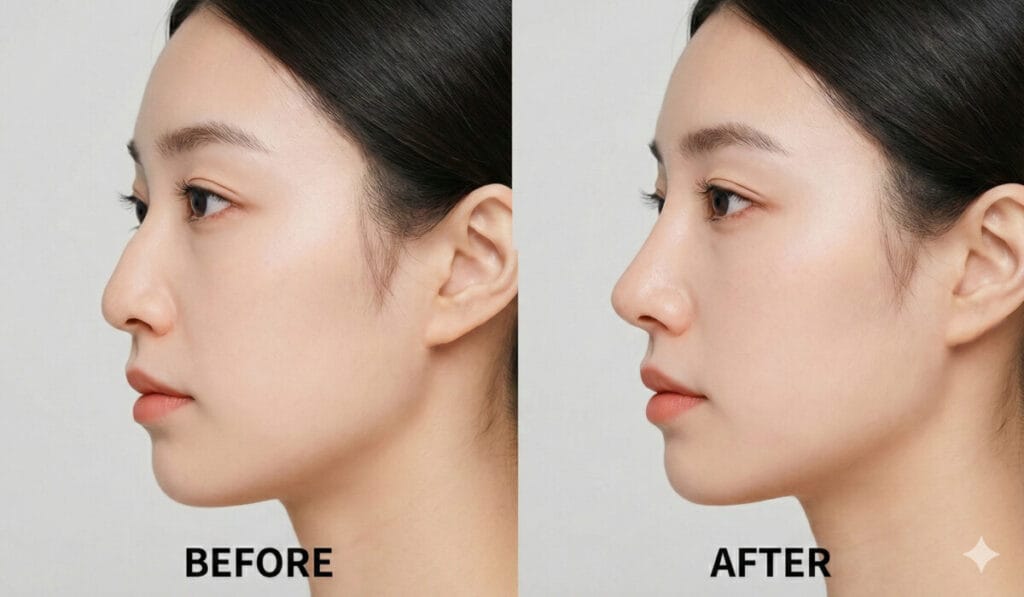
For many of my clients visiting from Singapore and Indonesia, the decision to undergo plastic surgery is about more than just vanity—it is about confidence and self-enhancement. And when it comes to facial harmony, the nose plays a pivotal role.
South Korea is undeniably the global capital of rhinoplasty. However, navigating the hundreds of clinics in Gangnam can be overwhelming. “How much should I really budget?” “Why do prices vary so much?” “Is it safe?”
As someone who has spent over a decade walking the halls of Seoul’s top clinics and consulting for thousands of international patients, I am here to guide you through the noise. Here is everything you need to know to plan a safe, successful rhinoplasty in Korea.
Why Korea? The Pursuit of the “Natural” Look
Ten years ago, the trend was simply “higher and pointier.” Today, the philosophy has shifted entirely.
The reason discerning women from Southeast Asia prefer Korean surgeons is their mastery of the “Natural Fancy” aesthetic. This technique focuses on balancing the nose with your existing facial features—your forehead curve, your chin projection, and your cheekbones. The goal is a nose that looks like you were born with it, just refined.
The Real Cost: Understanding Rhinoplasty Pricing in Korea
One of the most common questions I receive is, “How much does it cost?” The answer is rarely a single number because Korean rhinoplasty pricing is structured very much like a tailored suit or a customizable car.
The “base price” usually covers the bridge and tip, but the final quote depends heavily on the specific “options” required to achieve your ideal shape.
2025/2026 Estimated Price Guide (USD)
| Procedure Type | Estimated Range (USD) |
| Basic Rhinoplasty (Bridge + Simple Tip) | $3,500 – $5,000 |
| Detailed Rhinoplasty (Bridge + Tip + 1 Option) | $5,500 – $7,500 |
| Rib Cartilage Rhinoplasty (Structural) | $8,500 – $12,000 |
| Revision Rhinoplasty | $9,000 – $16,000+ |
Why Does the Price Increase? (The “Option” Structure)
It is crucial to understand that every additional technique adds surgical time and complexity, which adjusts the cost. Here is how the pricing structure generally works:
- Material Choice: Using standard silicone is the baseline. Using autologous rib cartilage (your own rib) involves a second surgical site and more complex carving, which can increase the cost by $3,000 – $5,000.
- Alar Reduction (Nostril Slimming): If your nostrils are wide or flaring, this procedure is added to narrow the base.
- Osteotomy (Bone Breaking): If your nasal bone is wide, the surgeon must carefully fracture the bone to narrow the bridge. This is a highly skilled “add-on.”
- Hump Reduction: Shaving down a bump on the bridge requires additional precision tools.
Insider’s Tip: In my 10 years of experience, I often see clients confused by low advertisements on the internet. Be careful. Those “special offers” usually only cover a simple silicone bridge.
When you consult with us, we ensure you get a “Total Quote” that includes anesthesia, tax, and necessary options (like alar reduction) upfront, so there are no surprises when you arrive at the clinic.
Understanding the Procedure: It’s Not One-Size-Fits-All
Once you understand the budget, it is time to look at the techniques. Rhinoplasty is not a single procedure; it is a combination of techniques tailored to your anatomy.
1. Bridge Augmentation
For patients with flatter nasal bridges (common in Asian phenotypes), we often use silicone implants or Gore-Tex to add height and definition. Modern implants are softer and carved individually to fit your nasal bone perfectly.
2. Tip Plasty (The Art of the Tip)
To create a refined, sturdy tip, Korean specialists rarely use artificial materials alone. Instead, they use autologous cartilage (from your own body):
- Septal Cartilage: The standard choice for structural support.
- Ear Cartilage: Soft and flexible, perfect for shaping the tip naturally.
The Safety Checklist: How to Avoid “Ghost Doctors”
Safety is non-negotiable. “Ghost surgery” refers to a situation where a famous head surgeon consults with you, but a different, junior doctor performs the surgery while you are under anesthesia.
How we ensure your safety: In my agency, we have a strict vetting process. We only work with hospitals that adhere to the following:
- CCTV in Operating Rooms: Full transparency is a must.
- Real-Name System: The surgeon you meet is the surgeon who operates.
- Anesthesiologist on Site: A dedicated specialist must monitor your vitals throughout the entire procedure.
The Recovery Timeline: What to Expect
Recovery is faster than you might think, but you need to plan your trip accordingly.
- Day 1-3: You will have packing in your nose and a splint. Swelling is at its peak.
- Day 5-7: Stitch and splint removal. This is the “freedom” day! You can usually wear makeup after this.
- Month 1: About 70% of the major swelling subsides.
My Personal Recommendation: Don’t just lie in bed! I advise all my clients to go for gentle walks along the Han River starting from Day 2. Light walking improves blood circulation and speeds up deswelling significantly.
How We Make Your Journey Seamless
Planning a surgery abroad involves logistics, language barriers, and medical decisions. You shouldn’t have to handle that alone.
At our agency, we act as your local guardian.
- Objective Price Comparisons: We gather quotes from 3 top-tier clinics based on your specific nose shape and desired options, ensuring you don’t overpay.
- Communication: Our medical interpreters ensure your exact wishes are conveyed to the surgeon.
- Aftercare: From airport pick-up to deswelling treatments, we are with you until you fly home.
Ready to Start Your Transformation?
Rhinoplasty is a journey to a more confident you. If you are considering rhinoplasty in Korea, don’t leave it to chance.
Would you like a transparent cost breakdown for your specific case? Send us your photos today for a confidential consultation, and let’s find the perfect surgeon for your budget and goals.